An athlete's signature collection
A washed hoodie and tee programme with matching headwear and jacquard socks — 6,200 units across eight styles, built around two finishes and a single delivery date.
- Market
- Athletes & creators
- Status
- Delivered client work
- Client
- An athlete-led label in motorsport
Named only with the client’s written agreement. Available on request.
- Credits
- Development, sourcing, production management, quality and delivery — Apex Studio. Creative direction by the client.
Challenge
Creative intent
Product architecture
- Two hooded sweatshirts in 100% cotton — one sandblasted and enzyme-washed, one in a solid shade
- Two T-shirts in 100% cotton, mirroring the same washed and solid split
- Beanie in 100% cotton with embroidery
- Cap in 100% cotton with front and side embroidery
- Jacquard socks in an 80% cotton / 18% polyamide / 2% elastane blend, in two colourways
Development approach
- Coded styles from the outset, so every colourway and body has a single unambiguous reference through sampling and production
- Washed and unwashed versions of the same body developed as separate specifications, because the finish changes the measurements
- Front-and-back decoration decided per finish — discharge print on the washed pieces, screen and solid print on the clean shades
- Headwear and socks planned against the same delivery date rather than following the apparel
Materials and techniques
- 100% cotton hoodie and tee bodies
- Sandblast finish followed by an enzyme wash on the washed pieces
- Discharge print front and back on washed bodies, screen print on solid shades
- Embroidery on beanie and cap, jacquard construction on the socks
Production route
Quality approach
What was produced
Details
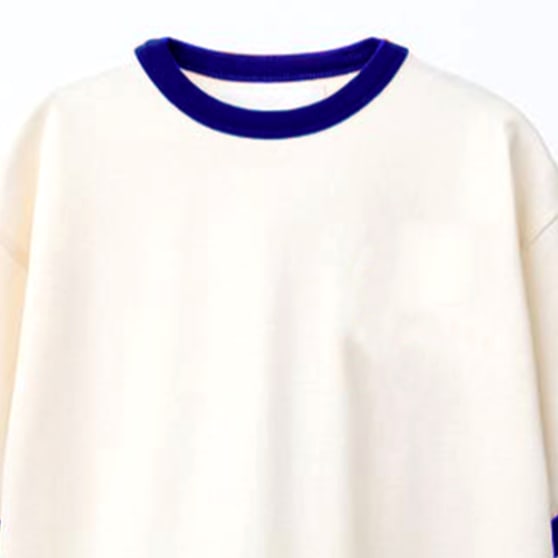
Image pendingPackaging and presentation — box, bag, hangtag, tissue


Eight styles, one date
Athlete-led ranges usually fail in one of two ways: they grow until nothing in them is properly developed, or they arrive in fragments because the socks were ordered after the hoodies.
This one was capped at eight styles and planned backwards from a single delivery date, with the accessories on the same calendar as the apparel rather than behind it.
Why the wash was the critical decision
Half the range is sandblasted and enzyme-washed. That treatment is what gives the collection its character, and it is also the thing most likely to go wrong:
- It moves the shade. A washed cotton does not land where the lab dip says it will unless the wash is part of the approval.
- It moves the measurements. The washed hoodie and the solid-shade hoodie are the same body but not the same specification.
- It changes how print behaves. Discharge print on washed cloth behaves differently from screen print on a clean shade, which is why each was trialled on its own base.
Running apparel through a supplier with in-house washing kept all of that under one colour standard rather than shipping goods between a maker and a laundry.
The two-register range
Washed and solid pieces sitting together is what makes eight styles feel like a collection rather than four items in two colours. It only works if the two registers are developed as deliberately different specifications — and then checked side by side before anything ships.
Permissions
Published without naming the client pending written approval. No name, likeness, team marks or sponsor identities are used here. Commercial terms are not disclosed.
More work
A fashion label's football collaboration programme
Four drops in twenty days — 30 order lines and 13,784 units across jersey, fleece, nylon outerwear and embroidered bombers, for a fashion label working with two European football clubs.
A full lifestyle capsule for a football brand
Fifteen order lines in one production window — tanks, tees, polos, a tracksuit family, headwear, socks, a tote and a bandana, all carrying the same label and trim system.
A single-style programme at volume
One garment, 2,500 units, one date. A sublimated hooded track jacket where every decision that mattered was made before a single metre was printed.